
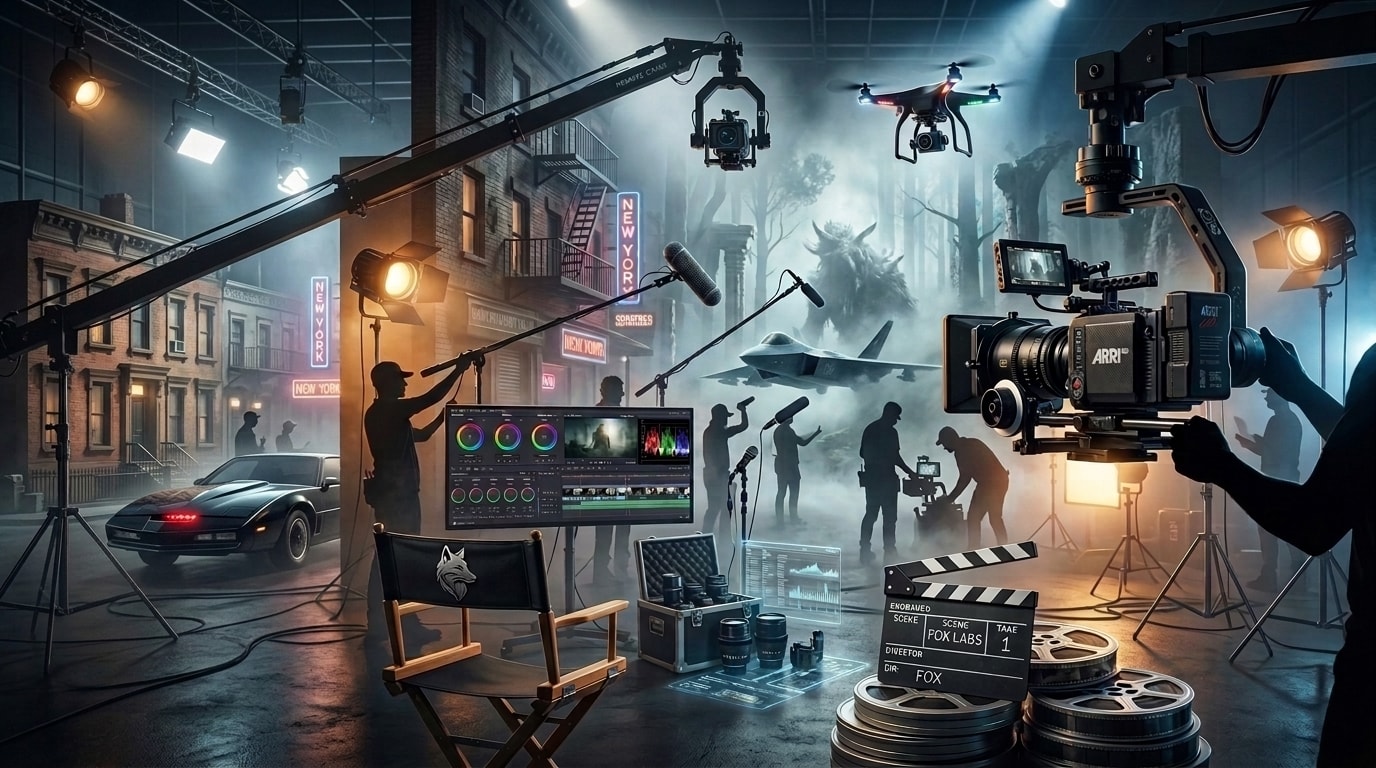
Long before AI-powered visual effects, Knight Rider amazed millions with a talking car that felt completely real. We dug into the practical effects, camera rigs, and production secrets that made KITT an icon — and what filmmakers today can still learn from it.
The Practical Magic
KITT's voice was the easy part. The harder challenge was making a car feel like a character — giving it personality through movement, lighting, and camera work. The production team developed a set of techniques that are still studied today.
The scanner light — that iconic red sweep across KITT's front — was a practical effect. A motorised light bar, custom-built for the production, that could be controlled from inside the car. No post-production required. What you saw on screen was exactly what was on set.
Camera Rigs of the Era
Shooting a moving car in the 1980s required physical camera mounts bolted to the vehicle. The operators rode with the car, adjusting framing in real time. There was no remote operation, no stabilisation beyond the mount itself. The shots had a quality that modern car rigs — for all their sophistication — sometimes struggle to replicate.
What Modern Filmmakers Can Learn
The lesson from KITT isn't nostalgia — it's constraint. When you can't rely on post-production to fix things, you solve problems on set. That discipline produces a different kind of filmmaking. More intentional. More physical. And often more memorable.